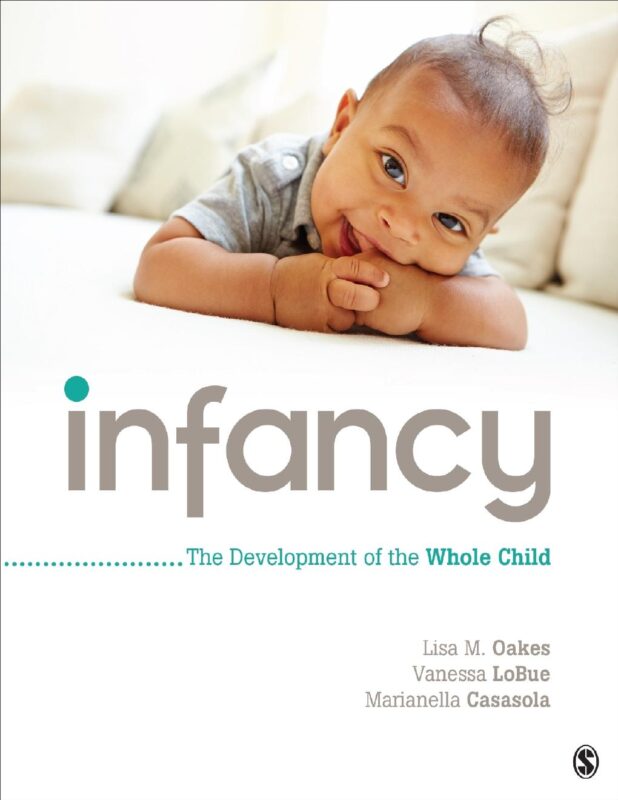
Infancy The Development of the Whole Child 1st Edition By Lisa Oakes, Vanessa Lobue, Marianella Casasola
$30.00
Secure checkout
Instant digital download
PDF document
Document details
- Pages
- 510
- File size
- 22.26 MB
- Format
- Digital PDF
- Course
- Psychology
- Category
- eBook[PDF]
Sign in or create a free account to continue. Your purchase will be saved in My Downloads.
About this ebook
The Infancy: The Development of the Whole Child (1st Edition), written by Lisa M. Oakes, Vanessa LoBue, and Marianella Casasola, is a topically organized textbook that explores infant and toddler development from birth to age three. [1]
Instead of looking at milestones in isolation, the book adopts an interconnected bio-psycho-social framework. The core topics and themes covered throughout the text include: [1, 2]
1. Biological and Physical Development
- Brain Development: How the infant brain grows, maps connections, and adapts to early environments.
- Perceptual and Sensory Systems: The initial status and rapid maturation of an infant’s vision, hearing, touch, taste, and smell.
- Motor Skills: The progression of gross motor milestones (e.g., rolling, sitting, crawling, walking) alongside fine motor control (manipulating objects).
- Health and Nutrition: Crucial early-life practices like breastfeeding and their broader developmental impacts. [1, 2]
2. Psychological and Cognitive Development
- Cognitive Processing: Early memory systems, attention spans, problem-solving abilities, and how infants conceptualize the physical world. [1, 2]
- Historically Significant & Modern Theories: Grounding core observations in classic frameworks (such as Piaget’s sensorimotor stages) while incorporating cutting-edge modern research. [1, 2]
- Language Acquisition: The progression of infant communication from early vocalizations (cooing and babbling) to gestures, word learning, and early sentence structure. [1, 2]
3. Social and Emotional Development
- Attachment Frameworks: How infants build psychological attachments with primary caregivers and how different attachment styles form. [1, 2]
- Temperament and Personality: Individual differences in infant dispositions, behavioral styles, and the concept of "goodness of fit" between child and environment. [1]
- Self-Awareness and Emotional Growth: The emergence of self-concept, social anxiety (such as stranger wariness and separation anxiety), and emotional regulation. [1, 2]
4. Sociocultural and Environmental Contexts
- The "Whole Child" Intersection: How cultural backgrounds, socioeconomic status (SES), and language exposure create unique individual paths in development.
- Applied Contexts: Connecting empirical lab research directly to real-world parenting choices, modern social policies, and everyday home environments. [1]
File included
tmpphp3PFz6o
22.26 MB
Related ebooks