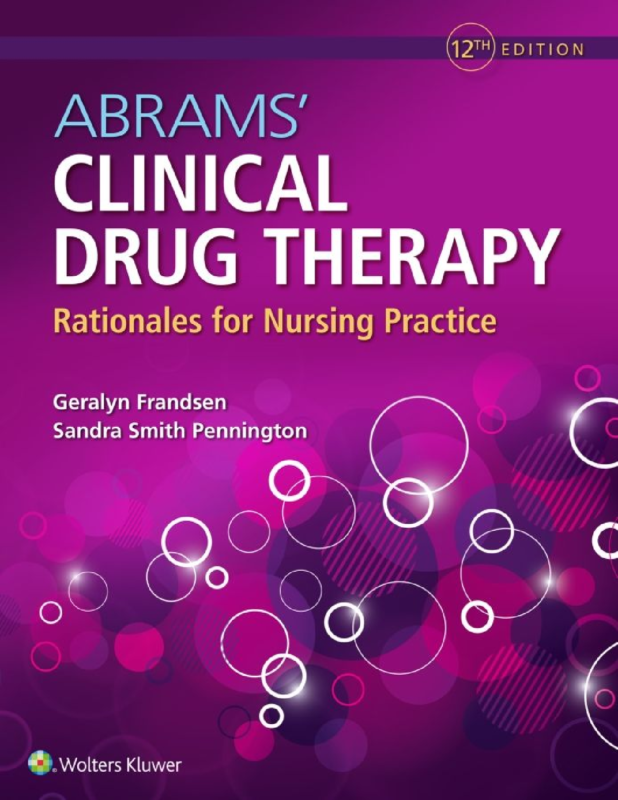
eBook Abrams’ Clinical Drug Therapy Rationales for Nursing Practice 12th Edition By Geralyn Frandsen, Sandra Smith Pennington
$30.00
Secure checkout
Instant digital download
PDF document
Document details
- Pages
- 3,605
- File size
- 99.85 MB
- Format
- Digital PDF
- Course
- NURSING
- Category
- eBook[PDF]
Sign in or create a free account to continue. Your purchase will be saved in My Downloads.
About this ebook
TheAbrams’ Clinical Drug Therapy: Rationales for Nursing Practice (12th Edition) by Geralyn Frandsen and Sandra Smith Pennington (Huddleston) is a comprehensive textbook structured around the core principles of pharmacology and a systems-based approach to drug therapy. It contains 57 to 61 chapters organized into broad conceptual and physiological sections. [1, 2, 3, 4]
The primary sections and topics covered in this edition include:
1. The Conceptual Framework of Pharmacology
- Foundations of Pharmacology: Focuses on medication safety, legal and ethical standards, quality and safety education for nurses (QSEN), and preventing medication errors. [1, 2, 3]
- Core Principles: Pharmacokinetics (absorption, distribution, metabolism, excretion) and pharmacodynamics (receptor theory, agonists, and antagonists). [1, 2]
- The Nursing Process: Applying clinical reasoning, assessment, nursing interventions, and evaluating patient outcomes in drug therapy. [1, 2]
2. Drug Therapy Throughout the Lifespan
- Pediatric Pharmacology: Lifespan adjustments, dosage calculations, and administration techniques unique to infants and pediatric patients. [1, 2, 3]
- Geriatric Pharmacology: Considerations for older adults, focusing on age-related physiological changes, altered drug clearance, and polypharmacy. [1]
- Pregnancy and Lactation: Evaluating therapeutic benefits against potential risk categories for pregnant or breastfeeding mothers. [1, 2]
3. Drugs Affecting Inflammation and Infection
- Pain and Inflammation Management: Use of NSAIDs, acetaminophen, salicylates, and corticosteroids. [1, 2]
- Antimicrobial and Anti-infective Agents: Beta-lactam antibiotics, aminoglycosides, fluoroquinolones, tetracyclines, sulfonamides, and urinary antiseptics. [1, 2]
- Specialized Anti-Infectives: Comprehensive drug protocols for tuberculosis, viral infections (including HIV), fungal infections, and parasitic infections. [1, 2]
4. Drugs Affecting the Cardiovascular and Hematologic Systems
- Cardiovascular Management: Therapeutics managing hypertension, dysrhythmias, coronary heart disease, heart failure, shock, and hypotension.
- Hematologic Agents: Anticoagulants, antiplatelets, thrombolytics, and therapies correcting hematologic disorders or anemia.
- Lipid Management: Dyslipidemia therapies targeting cholesterol levels. [1, 2]
5. Drugs Affecting the Respiratory System
- Allergy and Cold Management: Antihistamines, nasal decongestants, antitussives, and mucolytics.
- Bronchoconstrictive Disease: Medications managing asthma, COPD, and bronchodilators. [1, 2]
6. Drugs Affecting the Central and Autonomic Nervous Systems
- Autonomic Nervous System: Adrenergic and cholinergic agonists and antagonists.
- Neurological and Mental Health Disorders: Medications addressing anxiety, depression, bipolar disorder, psychosis, seizures, Parkinson's disease, and Alzheimer's disease.
- Pain Control and Anesthesia: Opioid analgesics, local anesthetics, and general anesthesia management. [1, 2, 3]
7. Drugs Affecting the Endocrine and Reproductive Systems
- Metabolism & Glycemic Control: Insulin and oral antidiabetic agents for diabetes management.
- Hormone Regulation: Hypothalamic, pituitary, thyroid, parathyroid, and adrenal medications.
- Reproductive Health: Women’s and men’s health drugs, including contraceptives, fertility medications, and testosterone therapies. [1, 2]
8. Drugs Affecting the Gastrointestinal, Urinary, and Immune Systems
- Gastrointestinal Tract: Therapies for peptic ulcer disease, GERD, nausea/vomiting, constipation, and diarrhea.
- Renal and Urinary Regulation: Fluid and electrolyte balance along with various classes of diuretics.
- Immunity & Oncology: Immunizing agents (vaccines), immunosuppressants, and antineoplastic (cancer) chemotherapies. [1]
File included
eBook-PDF-Abrams-Clinical-Drug-Therapy-Rationales-for-Nursing-Practice-12th-Edition-By-Geralyn-Frandsen-Sandra-Smith-Pennington.pdf
99.85 MB
Related ebooks