
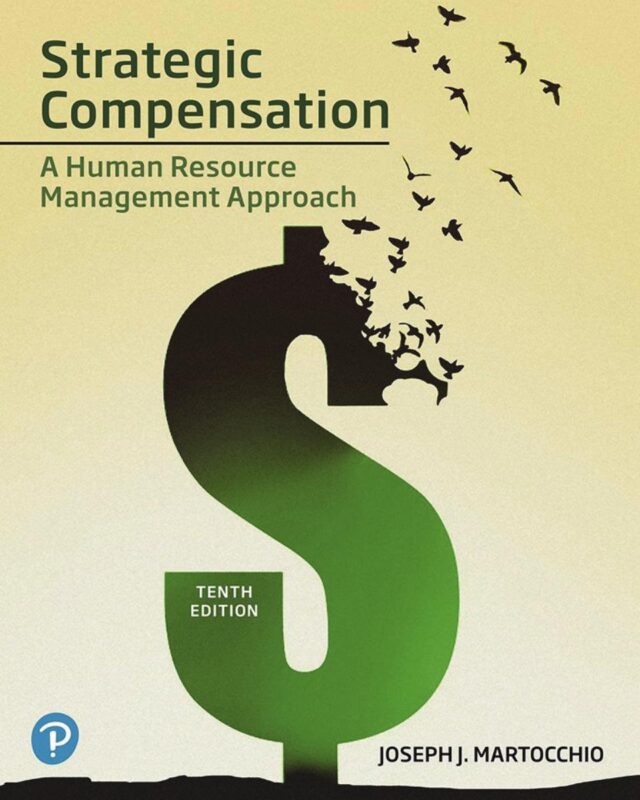
Strategic Compensation A Human Resource Management 10th Edition By Joseph J Martocchio
$30.00
Secure checkout
Instant digital download
PDF document
Document details
- Pages
- 420
- File size
- 19.25 MB
- Format
- Digital PDF
- Course
- Education
- Category
- eBook[PDF]
Sign in or create a free account to continue. Your purchase will be saved in My Downloads.
About this ebook
The Strategic Compensation: A Human Resource Management Approach (10th Edition) by Joseph J. Martocchio covers the art and science of compensation practice and outlines how companies design reward systems to build a competitive advantage. [1, 2]
Part 1: Setting the Stage for Strategic Compensation
- Chapter 1: Strategic Compensation: A Component of Human Resource Systems – Explores the role of compensation in reinforcing business goals and HR strategies (e.g., total rewards, base pay, and variable incentives). [1, 2]
- Chapter 2: Contextual Influences on Compensation Practice – Examines external factors shaping pay, such as labor market conditions, federal laws, and economic constraints. [1, 2]
Part 2: Bases for Pay
- Chapter 3: Traditional Bases for Pay: Seniority and Merit – Compares longevity-based salary adjustments with performance-driven merit systems.
- Chapter 4: Incentive Pay – Covers variable pay plans, individual/team performance metrics, and alignment with organizational goals.
- Chapter 5: Person-Focused Pay – Details skill-based and knowledge-based structures that reward employees for learning new competencies. [1, 2, 3]
Part 3: Designing Compensation Systems
- Chapter 6: Building Internally Consistent Compensation Systems – Focuses on job analysis and job evaluation techniques to ensure internal equity. [1]
- Chapter 7: Building Market-Competitive Compensation Systems – Covers using compensation surveys and market data to position an organization competitively against rivals. [1, 2]
- Chapter 8: Building Pay Structures that Recognize Employee Contributions – Merges internal values and market data into actual pay grades, salary ranges, and pay leveling structures. [1, 2]
Part 4: Employee Benefits
- Chapter 9: Discretionary Benefits – Analyzes voluntary perks offered by companies, including lifestyle rewards, wellness plans, and optional protection programs.
- Chapter 10: Legally Required Benefits – Addresses mandatory employer obligations, such as Social Security, workers' compensation, and unemployment insurance. [1, 2]
Part 5: Contemporary Strategic Compensation Challenges
- Chapter 11: Compensating Executives – Discusses executive compensation packages, the CEO pay-ratio rule, regulatory filings (such as proxy statements), and corporate governance.
- Chapter 12: Compensating the Flexible Workforce: Contingent Employees and Flexible Work Schedules – Reviews specific challenges tied to part-time workers, independent contractors (the gig economy), and remote employees. [1, 2, 3, 4]
Part 6: Compensation Issues Around the World
File included
tmpphpfaguy9
19.25 MB
Related ebooks



