
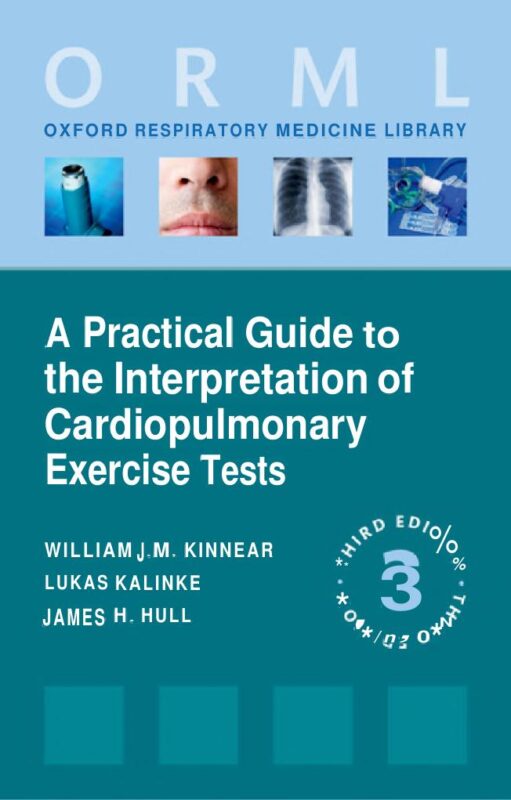
A Practical Guide to the Interpretation of Cardiopulmonary Exercise Tests 2nd Edition By William Kinnear, James Hull
$30.00
Secure checkout
Instant digital download
PDF document
Document details
- Pages
- 301
- File size
- 7.34 MB
- Format
- Digital PDF
- Course
- Medical Studies
- Category
- eBook[PDF]
Sign in or create a free account to continue. Your purchase will be saved in My Downloads.
About this ebook
A Practical Guide to the Interpretation of Cardiopulmonary Exercise Tests (2nd Edition) is authored by William J.M. Kinnear and James H. Hull. Part of the Oxford Respiratory Medicine Library series, this textbook simplifies the evaluation of complex Cardiopulmonary Exercise Testing (CPET) data into accessible steps. [1, 2, 3]
The second edition is expanded to include 16 fully updated chapters and 4 new chapters, covering the following core topics and sections: [1]
1. Test Overview, Safety, and Implementation
-
- Indications for CPET: Why the test is requested, including its role in investigating unexplained breathlessness (dyspnea) and predicting surgical risk/operative mortality.
- Pre-Test Assessment: Preparing the patient, performing baseline spirometry, and evaluating physical readiness.
- Test Supervision & Safety: Best practices for monitoring patients, minimizing risk, and managing the safety protocols during exercise.
- Practical Logistics: Calibration, equipment details, and how to execute the test effectively to get clean data. [1, 2, 3, 4]
2. Core CPET Measured Parameters
Individual chapters focus deeply on the four foundational measurements of CPET: [1]
-
- Oxygen Uptake (VO₂): Tracking peak and maximal oxygen consumption.
- Carbon Dioxide Output (VCO₂): Exhaled metabolic gas metrics.
- Heart Rate (HR): Assessing cardiovascular response, chronotropic competence, and heart rate reserve.
- Minute Ventilation (\(\text{V}_{\text{E}}\)): Respiratory volumes and breathing patterns under physical stress. [1, 2, 3]
3. Derived Parameters and Benchmarks
-
- Calculated Metrics: Methods for evaluating Oxygen Pulse (O₂-pulse), Respiratory Exchange Ratio (RER), and Ventilatory Equivalents (\(\text{V}_{\text{eq}}\)).
- Anaerobic Threshold (AT): Pinpointing the threshold where anaerobic metabolism supplements aerobic metabolism.
- Respiratory Compensation Point (RCP): Identifying severe metabolic acidaemia and systemic compensation.
- Advanced Monitoring: Tracking blood oxygen saturation (SpO₂) changes and generating flow–volume loops. [1, 2, 3, 4]
4. Systematic Clinical Interpretation
- Interpretative Strategy: A structured, iterative approach to reviewing cardiovascular, ventilatory, and gas exchange data simultaneously. [1]
- Recognizing Clinical Conditions: Telltale patterns for specific diseases such as heart failure, chronic obstructive pulmonary disease (COPD), interstitial lung disease, and peripheral muscle deconditioning. [1, 2]
- Worked Case Examples: A collection of practical clinical scenarios and data displays to build confidence in real-world environments. [1, 2]
- Self-Test Questions: Review assessments integrated directly within the book to help readers gauge their comprehension. [1]
File included
tmpphpoYjlof
7.34 MB
Related ebooks