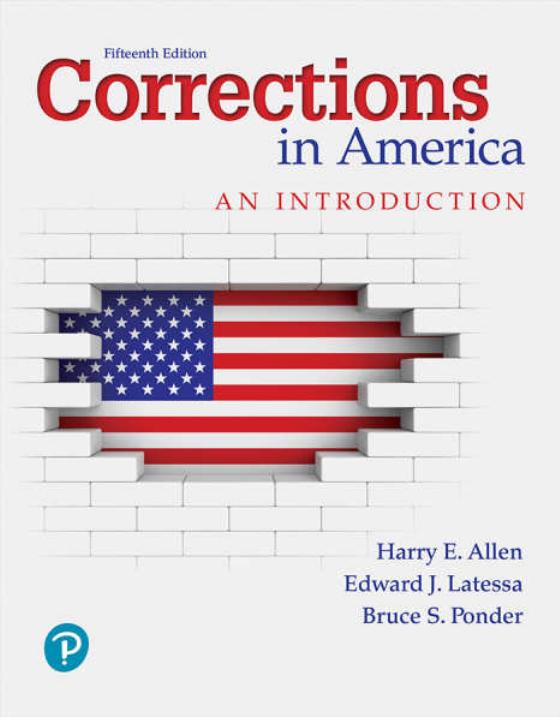
Corrections in America: An Introduction, 15th Edition By Harry E Allen, Edward J
$30.00
Secure checkout
Instant digital download
PDF document
Document details
- Pages
- 561
- File size
- 9.54 MB
- Format
- Digital PDF
- Course
- Education
- Category
- eBook[PDF]
Sign in or create a free account to continue. Your purchase will be saved in My Downloads.
About this ebook
Corrections in America: An Introduction (15th Edition) by Harry E. Allen, Edward J. Latessa, and Bruce S. Ponder offers a comprehensive overview of the American correctional system. It explores the history, legal frameworks, institutional operations, community alternatives, and various types of correctional populations. [1, 2, 3]
The book is structured into four core parts, split across specific chapters: [1]
Part 1: Historical Perspectives
- Early History (2000 BC to AD 1800): Explores early legal codes (Babylonian, Roman, Greek), the shift from crime as a sin to secular law, and the transition from corporal punishment to early workhouses and houses of correction. [1]
- Prisons (1800 to the Present): Tracks the evolution of the modern prison system, industrial prisons, and the development of prison structures in America. [1, 2]
- Correctional Ideologies: Discusses the shifting philosophical models over the decades, ranging from punishment and deterrence to treatment and rehabilitation. [1, 2]
- The Sentencing and Appeals Process: Analyzes the link between courts and corrections, focusing on how felony/misdemeanor sentencing works, the appeals process, and legal mandates. [1, 2]
Part 2: Alternatives to Imprisonment
- Probation: Details the execution and supervision of offenders serving sentences in the community rather than behind bars.
- Diversion and Intermediate Sanctions: Covers alternative programs like electronic monitoring, house arrest, boot camps, and intensive supervision that act as mid-level punishments. [1, 2]
Part 3: Institutional Corrections
- Jails and Detention Facilities: Examines local and short-term detention operations, which handle pretrial detainees and misdemeanor sentences.
- State and Federal Prison Systems: Looks at the structure, security tiers, and policies governing larger prison institutions.
- Custody Functions: Investigates the day-to-day security routines, operations, and control systems needed to keep institutions running safely.
- Security Threat Groups and Prison Gangs: Evaluates the presence, impact, and management of coordinated gangs and security threats inside institutional walls.
- Management and Treatment Functions: Highlights the inherent institutional tension between enforcing physical custody and providing offender rehabilitation or counseling.
- Private-Sector Systems: Reviews the rise, criticisms, and operations of privatized, for-profit correctional institutions.
- The Death Penalty: Summarizes the legal status, history, ethical questions, and shifting policies surrounding capital punishment in the U.S.
- Parole and Reentry: Addresses conditional early release programs, community supervision post-prison, and the challenges offenders face returning to society. [1, 2, 3, 4]
Part 4: Correctional Clients
- Appeals and Offender Rights: Covers the constitutional rights retained by inmates, including landmark court cases regarding conditions of confinement.
- Male Offenders: Analyzes demographics, specific safety concerns, and typical behavioral patterns within male-dominated institutions.
- Female Offenders: Focuses on the unique needs of women in the justice system, programming disparities, and parental separation.
- Juvenile Offenders and Facilities: Examines the distinct rules, philosophies, and facilities set aside for rehabilitating underage offenders.
- Special-Category Offenders: Focuses on managing vulnerable or high-risk populations, including aging prisoners, those with severe mental illnesses, individuals with substance use disorders, and sex offenders. [1, 2, 3, 4, 5]
File included
tmpphpRbsgiW
9.54 MB
Related ebooks