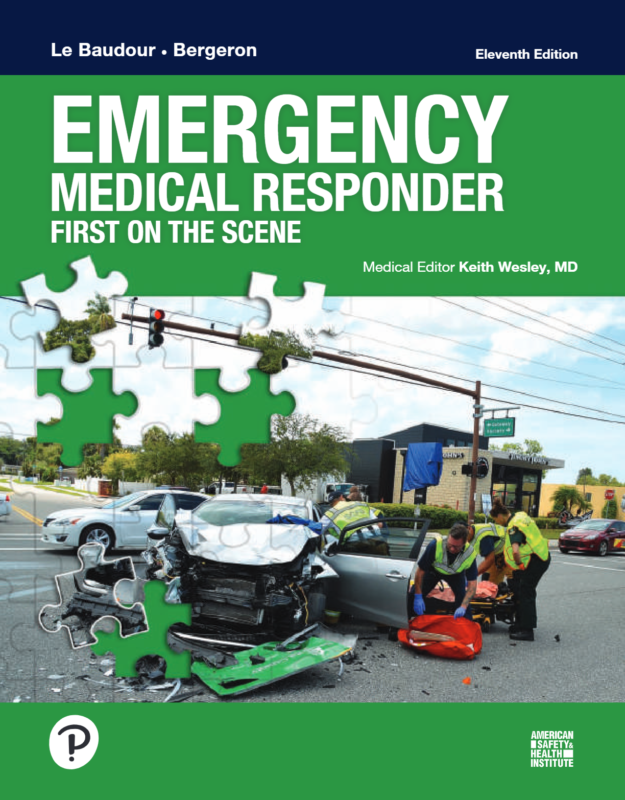
Emergency Medical Responder, First on Scene 11th Edition By Chris Le Baudour, David Bergeron, Keith Wesley
$30.00
Secure checkout
Instant digital download
PDF document
Document details
- Pages
- 650
- File size
- 38.49 MB
- Format
- Digital PDF
- Course
- Emergency Medicine
- Category
- eBook[PDF]
Sign in or create a free account to continue. Your purchase will be saved in My Downloads.
About this ebook
Emergency Medical Responder: First on Scene" (11th Edition) by Chris Le Baudour and J. David Bergeron is a foundational textbook based on the National EMS Education Standards and updated with the American Heart Association (AHA) Guidelines. [1]
The book is structured into 27 comprehensive chapters and 4 operational appendices, broken down logically by core medical modules: [1]
🟥 Module 1: Preparatory & Foundations
-
- Chapter 1: Introduction to EMS Systems – EMS network layout, levels of training (EMR, EMT, AEMT, Paramedic), and medical oversight. [1, 2]
- Chapter 2: Legal and Ethical Principles of Emergency Care – Consent, refusal of care, Duty to Act, standard of care, abandonment, and HIPAA privacy rules. [1, 2, 3]
- Chapter 3: Wellness and Safety of the Emergency Medical Responder – Personal protective equipment (PPE/BSI), stress mitigation, and emerging infectious diseases (e.g., Zika, Ebola). [1, 2]
- Chapter 4: Introduction to Medical Terminology, Human Anatomy, and Lifespan Development – Structural medical prefixes, suffixes, major body cavities, biological systems, and patient age-specific physiology. [1, 2]
- Chapter 5: Introduction to Pathophysiology – Standard cellular processes, fluid balances, and how shock disrupts systemic perfusion. [1]
- Chapter 6: Principles of Lifting, Moving, and Positioning of Patients – Body mechanics, emergent vs. standard moves, and therapeutic patient positioning. [1]
🟨 Module 2: EMS Documentation & Interpersonal Communication
-
- Chapter 7: Principles of Effective Communication – Therapeutic verbal strategies, radio communication etiquette, and transferring care to arriving ambulance crews. [1]
- Chapter 8: Principles of Effective Documentation – Completing the Patient Care Report (PCR), electronic vs. paper error corrections, and smartphone tracking metrics. [1]
🟦 Module 3: Airway Management, Oxygen, & Resuscitation
-
- Chapter 9: Principles of Airway Management and Ventilation – Opening the airway (head-tilt/jaw-thrust), airway adjuncts (OPA/NPA), suctioning protocols, and barrier devices.
- Chapter 10: Principles of Oxygen Therapy – Safely operating oxygen cylinders, regulators, non-rebreather masks, and nasal cannulas.
- Chapter 11: Principles of Resuscitation – High-quality CPR, Automated External Defibrillator (AED) utilization, and managing foreign body airway obstructions (choking). [1, 2]
🟩 Module 4: Patient Assessment
-
- Chapter 12: Obtaining a Medical History and Vital Signs – Gathering SAMPLE and OPQRST history indicators, measuring pulse, respiration, skin condition, and utilizing AHA blood pressure guidelines. []
- Chapter 13: Principles of Patient Assessment – Scene size-up, primary survey (ABCs), secondary examination, and ongoing reassessment routines. [1, 2, 3]
🟪 Module 5: Medical Emergencies & Illnesses
-
- Chapter 14: Caring for Cardiac Emergencies – Signs, symptoms, and emergency management of chest pain, heart attacks, and acute coronary syndromes.
- Chapter 15: Caring for Respiratory Emergencies – Identifying trauma compromise, agonal breathing, pulmonary edema, asthma, and pneumonia.
- Chapter 16: Caring for Common Medical Emergencies – Assessment patterns for altered mental status, strokes, seizures, diabetic emergencies, and abdominal pain.
- Chapter 17: Caring for Environmental Emergencies – Overcoming heat stroke, hypothermia, frostbite, stings, and localized bites.
- Chapter 18: Caring for Psychological Emergencies – Calming behavioral crises, handling a patient out of touch with reality, and managing potential suicide threats. [1, 3, 4]
🛞 Module 6: Trauma Care & Environmental Shock
-
- Chapter 19: Caring for Muscle and Bone Injuries – Fractures, dislocations, sprains, rigid/soft splinting, and treating anatomical deformities.
- Chapter 20: Caring for Soft-Tissue Injuries and Bleeding – Controlling external hemorrhage, tourniquet deployment, dress techniques, and treating specialized open wounds or burns.
- Chapter 21: Caring for Head, Facial, Ophthalmic, and Neck Injuries – Evaluating traumatic brain injury (TBI), facial trauma, and managing complex penetrating neck wounds.
- Chapter 22: Caring for Injuries to the Spine – Spinal column mechanisms of injury and modern manual stabilization restrictions.
- Chapter 23: Caring for Chest and Abdominal Injuries – Managing open pneumothorax (sucking chest wounds), flail chest segments, blunt force trauma, and abdominal eviscerations. [1]
👶 Module 7: Special Patient Populations
-
- Chapter 24: Care During Obstetric and Gynecological Emergencies – Anatomy of pregnancy, managing normal field deliveries, and handling neonatal resuscitation or postpartum hemorrhage.
- Chapter 25: Caring for Pediatric Patients – Anatomical differences in children, using the Pediatric Assessment Triangle (PAT), and identifying croup, epiglottitis, or child abuse signs.
- Chapter 26: Caring for Geriatric Patients – Managing age-related system declines, sensory loss complications, and differentiating polypharmacy risks.
🚨 Module 8: Rescue Operations & Mass Casualties
-
- Chapter 27: EMS Operations and Special Response – Vehicle extraction tactics, helicopter landing zones, Incident Command System (ICS), triage tags, and Hazardous Materials (HazMat) safety. [1]
📄 Appendices Covered
File included
eBook-Emergency-Medical-Responder-First-on-Scene-11e-By-Chris-Le-Baudour-David-Bergeron-Keith-Wesley.pdf
38.49 MB
Related ebooks