
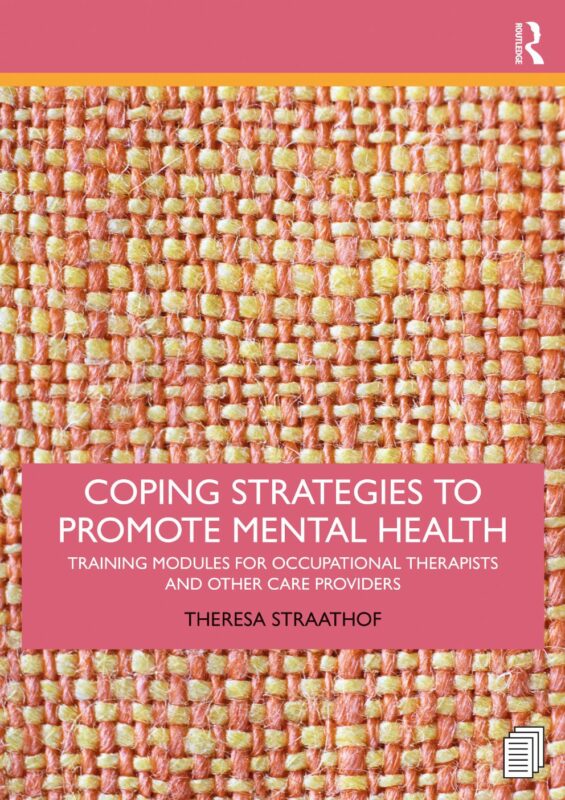
Coping Strategies to Promote Mental Health: Training Modules for Occupational Therapists and Other Care Providers 1st Edition By Theresa Straathof
$30.00
Secure checkout
Instant digital download
PDF document
Document details
- Pages
- 181
- File size
- 11.12 MB
- Format
- Digital PDF
- Course
- Medical Studies
- Category
- eBook[PDF]
Sign in or create a free account to continue. Your purchase will be saved in My Downloads.
About this ebook
The 1st edition of Coping Strategies to Promote Mental Health: Training Modules for Occupational Therapists and Other Care Providers by Theresa Straathof organizes its clinical interventions into four overarching coping categories. Each category is systematically broken down into four practical training modules (making a total of 16 modules) paired with explicit lesson plans, learning outcomes, and reproducible client handouts. [1, 2]
The Four Coping Categories & Key Modules
- Health and Wellness Routines
- Changing the Body's Response to Stress
- Changing the Situation
- Changing Attitudes
Structural Framework of Each Module
The book also details a strict pedagogical architecture. To track adult learning and verify progress, every individual module utilizes a specific 14-step layout for clinicians to deliver: [1]
- Learning Point: Concise summary of the core concept.
- Learning Objective: The explicit client action expected by the end of the session.
- Materials: Required group or individual intervention supplies.
- Handouts: Actionable activity sheets for the facilitator and client.
- Orientation: A baseline overview of the strategy being introduced.
- Clarification: Transparency regarding the session agenda.
- Warm-up: An interactive activity to lower barriers and engage participation.
- Experience: Sensory or practical activities to root the lesson in reality.
- Reflection: Guided introspection where clients evaluate their immediate insights.
- Generalization: Translating the immediate lesson into broader abstract thought.
- Application: Building concrete action plans to execute the strategy in daily environments.
- Evaluation of Objective: Real-time assessment of client mastery within the session.
- Wrap up: Addressing final questions and delivering closing thoughts.
- References: Authoritative, evidence-based sources validating the specific intervention. [1]
File included
tmpphpfUo1fF
11.12 MB
Related ebooks