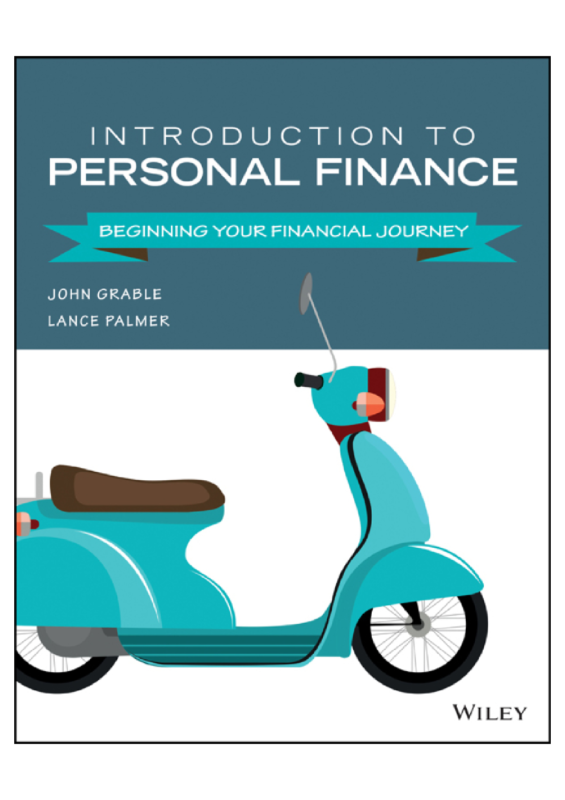
Solution manual for Introduction to Personal Finance Beginning Your Financial Journey by John E. Grable
$23.00
Secure checkout
Instant digital download
PDF document
Document details
- Pages
- 325
- File size
- 3.84 MB
- Format
- Digital PDF
- Course
- Finance
- Category
- SOLUTIONS MANUAL
Sign in or create a free account to continue. Your purchase will be saved in My Downloads.
About this ebook
The solution manual for "Introduction to Personal Finance: Beginning Your Financial Journey" by John E. Grable and Lance Palmer maps out foundational personal finance concepts through structured learning objectives, case studies, and quantitative problem-solving tools. [1, 2, 3, 4]
The textbook and its accompanying solutions manual primarily cover the following core topics across their chapters: [1, 2]
1. Behavioral and Interior Finance
- Financial Literacy: Understanding foundational terminology, economic indicators (like GDP), and basic financial systems.
- Interior Viewpoint: Defining personal financial values, tracking risk tolerance, and setting SMART financial goals.
- Behavioral Economics: Mitigating decision-making heuristics, cognitive biases, and emotional triggers that lead to poor spending habits.
- Capital Building: Developing social and human capital to boost lifetime earnings potential. [1, 2]
2. Foundational Financial Tools
- Budgeting: Building realistic cash flow statements to track active income versus fixed and variable expenses.
- Balance Sheets: Calculating personal net worth by balancing current/long-term assets against liabilities.
- Time Value of Money (TVM): Solving complex compound interest, future value, and present value mathematical formulas. [1, 2, 3]
3. Income, Taxation, and Cash Management
- Earnings & Income: Analyzing different income streams, employee benefits packages, and compensation structures.
- Personal Taxation: Navigating federal/state tax brackets, identifying deductions, and executing basic tax planning strategies.
- Liquidity Management: Evaluating checking accounts, savings vehicles, and modern banking platforms. [1, 2, 3]
4. Credit, Debt, and Major Purchases
- Credit Optimization: Managing credit reports, debt utilization, and optimizing individual FICO credit scores.
- Open-Ended Credit: Navigating the terms, interest rates, and traps associated with credit cards.
- Loans & Housing: Analyzing consumer loans, vehicle financing, auto leasing, and evaluating renting versus buying a home. [1, 2, 3]
5. Wealth Building and Risk Protection
- Savings Foundations: Strategies for automating emergency funds and building consistent short-term cash reserves.
- Investments: Exploring asset classes like stocks, bonds, and mutual funds while evaluating the risk-and-return spectrum.
- Risk Management: Mitigating financial disasters through health, auto, home, disability, and life insurance policies.
- Long-Term Planning: Navigating tax-advantaged retirement accounts (like 401ks or IRAs) and basic estate planning concepts. [1, 2, 3]
File included
Solution-for-each-chapter-and-Solution-manual-for-Introduction-to-Personal-Finance-Beginning-Your-Financial-Journey-by-John-E.-Grable.pdf
3.84 MB
Related ebooks